
This week, we’re going behind the scenes of The King’s Gambit (a six-book series I am working on) to look at one of the stranger balancing acts of writing fiction – and why sometimes writing a character well means resisting the urge to make them look good. If you’re writing a book of your own, there may be something useful here for you too.
When Good Writing Has to Look a Little Bad.
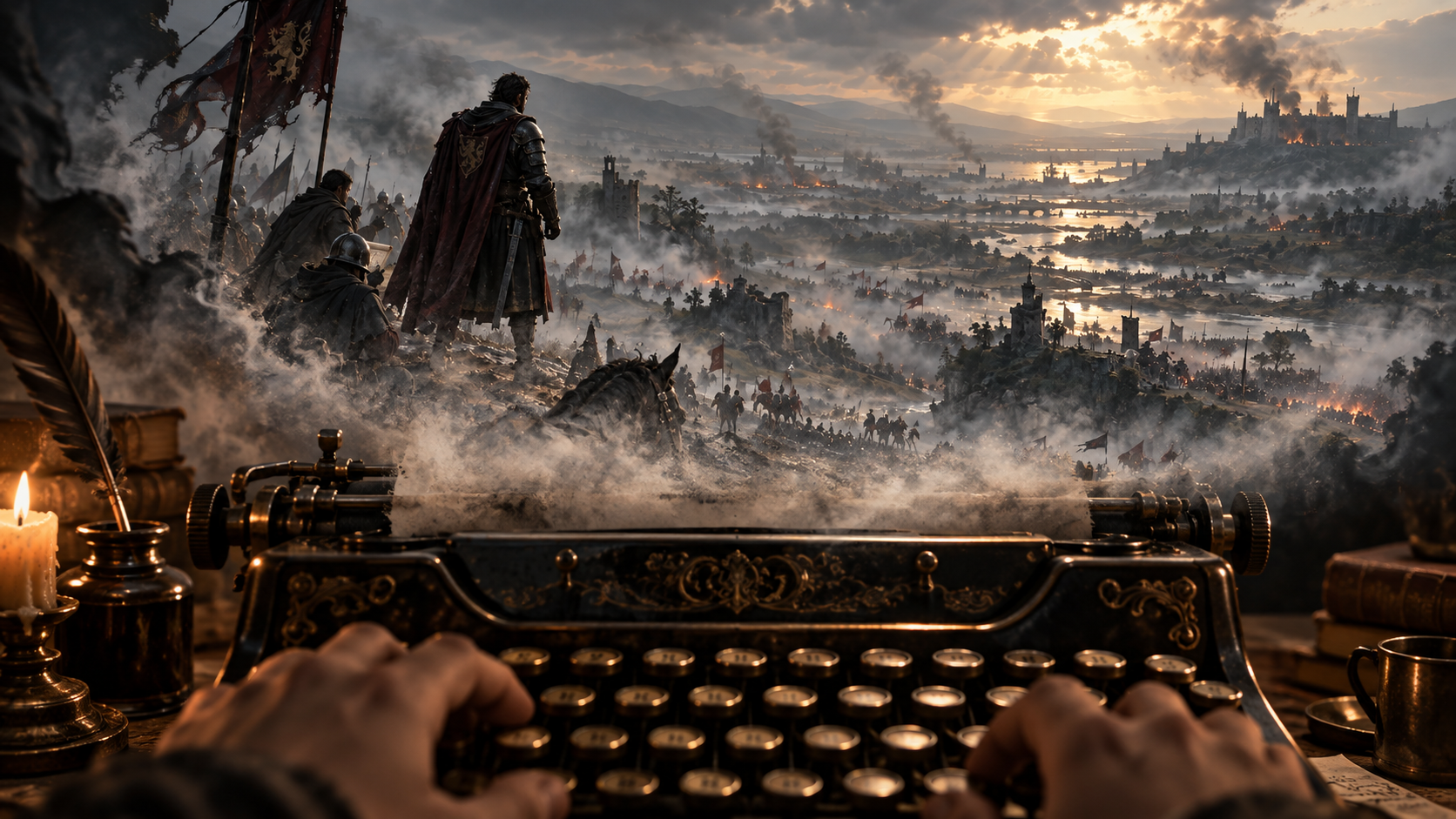
A long time ago, I was having a book chat with someone. He was writing his own fantasy novel and telling me he wrote battles better than Tolkien did.
“Tolkien doesn’t understand good battle tactics,” he said.
And I remember thinking: But Tolkien isn’t the one in charge of the battle.
Yes, Tolkien wrote the battles, but he was not the one standing in the mud, trying to command them with fear in his throat, death on every side, and only half the information he needed. That might sound like a small distinction, but for writers, it matters enormously.
The author may understand the better move. The author may see the trap, the weakness, the foolish order, the fatal hesitation. But the character on the ground may not. He may choose badly. He may misjudge the enemy. He may act from pride instead of wisdom, loyalty instead of strategy, panic instead of patience.
It’s hard, as a writer, to separate ego from our work. We might be brilliant at battle tactics and want to show it, but if the character isn’t good at battle tactics, we have to put our ego aside. The person telling me he wrote great battles needed to remember that he’s not the one having them; he’s just the one writing down what happened to the people who are having them. And he has to risk that he too will look like he doesn’t understand battle tactics, because the point is and always will be that character integrity comes first. Every time.
Sometimes characters make bad decisions because they are frightened. Or proud. Or desperate. Or working with limited information. Sometimes they are not clever enough to see the obvious answer. Sometimes they are clever in one area and hopeless in another. Sometimes they believe they are being strategic, while the reader can see the cracks. Sometimes they rush in when they should wait. Sometimes they wait when they should act. Sometimes they speak badly, think badly, plan badly, love badly, lead badly.
And if the writer has done their job well, those flaws belong to the character.
But that does not mean the writer will never be blamed for them.
That is one of the strange risks of writing fiction. Every mistake a character makes passes through the author’s hands first. Every clumsy thought, every foolish assumption, every wrong conclusion, every bad tactic, every awkward sentence, every ugly impulse. We choose what reaches the page. Which means there is always the danger that a reader will look at the character’s limitation and assume it is ours.
The temptation, then, is to protect ourselves.
We want to show that we know the cleverer answer. We want to prove that we understand the strategy. We want the dialogue to sparkle. We want the prose to look polished. We want the character to make the sharp observation, the wise decision, the emotionally mature response.
But sometimes the character would not do that. Sometimes good writing has to look a little bad.
Not actually bad, of course. That is the trick. The writing still has to be controlled, the scene still has to work, and the reader still needs to understand what is happening and why. But the character’s thoughts may need to be messy. Their speech may need to be repetitive. Their reasoning may need to be shallow, vain, frightened, self-deceiving, arrogant, or simply wrong.
A general might make a poor tactical decision because he is exhausted and cornered. A mother might say the cruel thing because fear gets there before love does. A young man might mistake silence for strength. A vain woman might believe she is manipulating everyone around her, while revealing to the reader just how little she understands.
That last one is something I have been working with recently in The King’s Gambit – the six-book series I am slowly wrapping up.
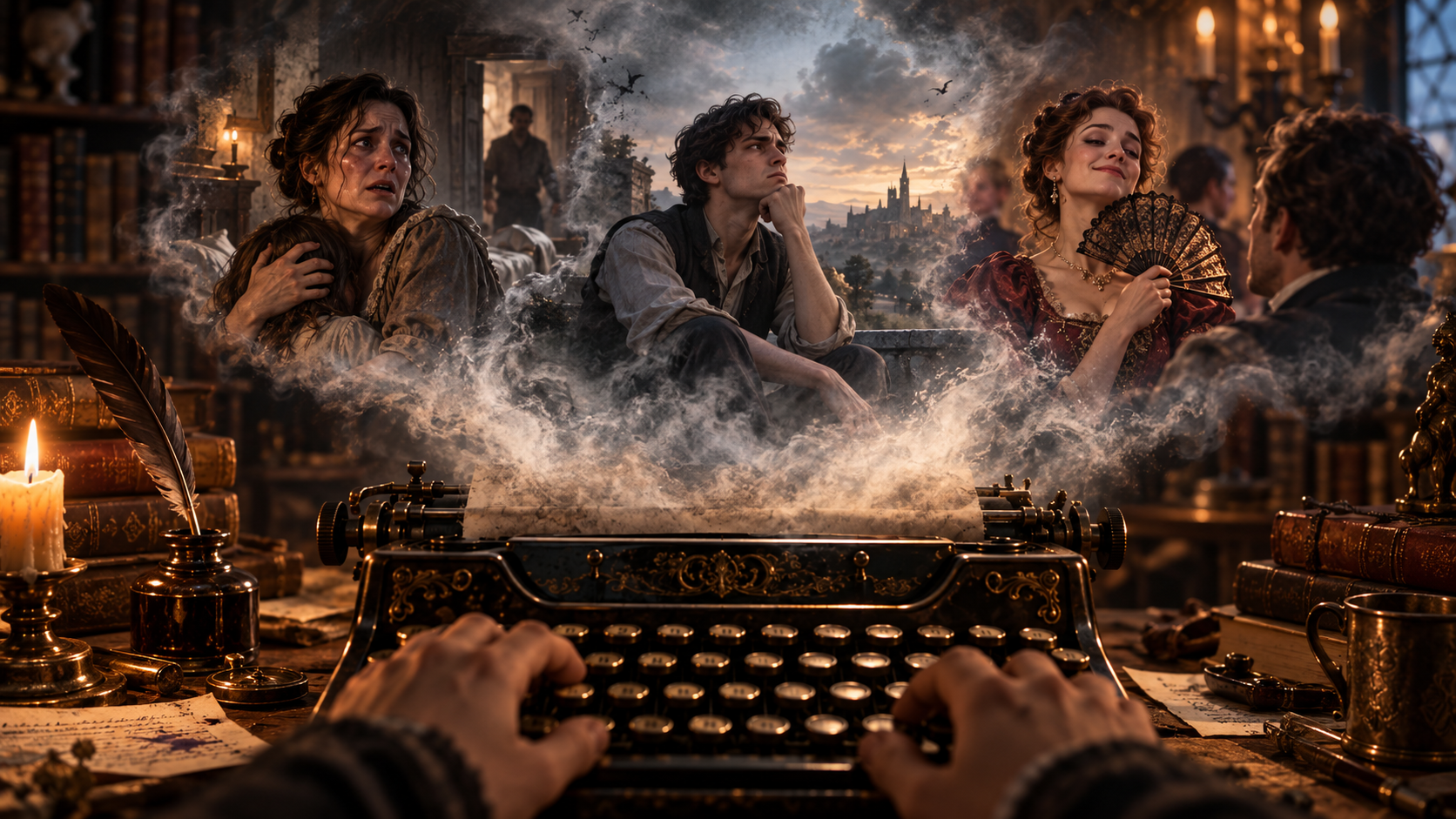
I have a character who is not a nice woman. She is vain, shallow, self-congratulatory, manipulative, and not nearly as clever as she believes herself to be. She is fun to write precisely because her view of herself and the truth of herself do not match.
In her own mind, she is brilliant. Irresistible. Subtle. Dangerous.
On the page, she has to reveal something else.
That means her thoughts cannot always be elegant. They cannot be too neatly ordered. She cannot suddenly sound like a disciplined political mind or a wise observer of human nature. If she repeats herself, if she flits from one surface judgement to another, if she mistakes attention for power, if she dresses up a foolish thought as cleverness, that is part of who she is.
And yet, as the writer, there is always that tiny uncomfortable voice whispering: What if readers think I wrote this badly by accident?
What if they think I forgot to tidy the prose? What if they think I did not notice the repetition? What if they think I failed to make her more intelligent, when the whole point is that she only thinks she is?
This is where character writing becomes a balancing act.
If every character speaks with perfect insight, the story may look polished, but it starts to feel false. If every person in a battle makes the cleverest possible tactical choice, no one is acting from panic, pride, loyalty, grief, misinformation, or human limitation. If every villain understands themselves beautifully, they stop being dangerous in the ordinary way real people can be dangerous: through blindness, appetite, vanity, resentment, or wounded pride.
But if the writing is too loose, the reader may not see the intention. They may not realise the flaws belong to the character rather than the craft.
So the trick is not simply to let characters be wrong. The trick is to make their wrongness feel deliberate.
A foolish decision should arise from pressure, personality, history, or belief. A clumsy thought should reveal how that person thinks. Repetition should show fixation, vanity, fear, obsession, confusion, or rhythm – not merely a lack of editing. Bad tactics should emerge from character, circumstance, or limitation, not from the author losing track of the field.
The writer’s hand still has to be steady, even when the character’s mind is not.
That, I think, is one of the hidden disciplines of fiction. We are not just writing what happens. We are writing who is capable of understanding what happens. We are deciding how much each character can see, how wrongly they interpret it, and how much of that wrongness the reader is allowed to notice.
Sometimes the strongest writing is not the cleverest sentence. Sometimes it is the sentence that sounds exactly like the person thinking it, even when that person is vain, or foolish, or just plain wrong.
And even when part of you wants to leap onto the page and prove that you, the author, know better.
Because of course you do.
But you are not the one in charge of the battle. ▪
About the Author: Lisa Saul







 Pinterest
 YouTube