New Art & What the ravens taught me about hope.
This week in Behind the Art, we offer a quiet reflection on spring, hard seasons, and the small reminders that the world still carries hope.
Before my husband, my son, and I moved to Scotland, we lived in a small village in England. From the office on the second floor of our house, I could look out across the rooftops toward a fourteenth-century church whose stone tower watched quietly over the village. Beyond it — beyond the little ribbon of homes that made up the village itself — stood a grand estate lined with magnificent old English trees, each one several storeys high. Some of them may well have been older than the village itself.
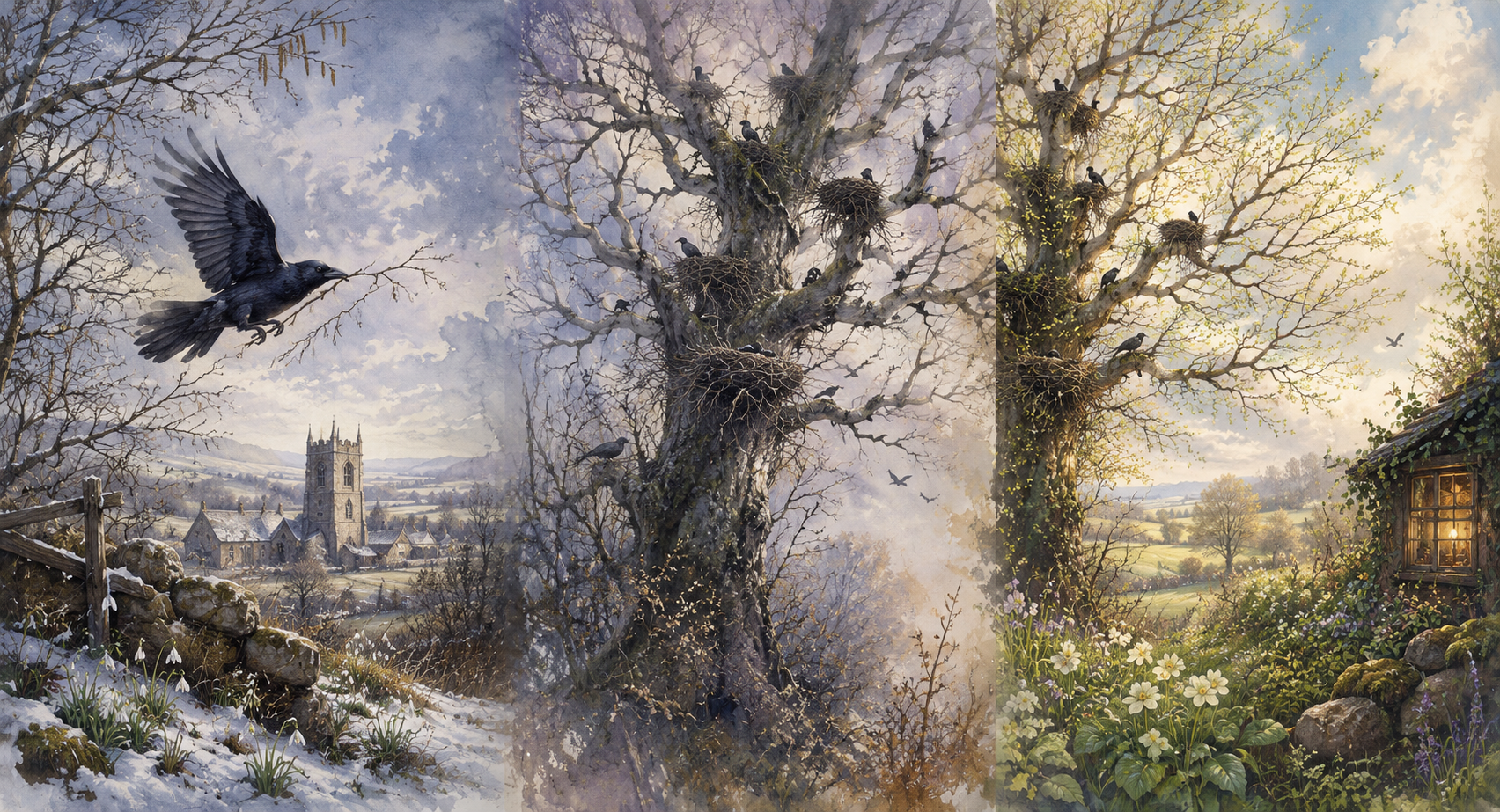
High within those trees were whole other “villages” — communities of ravens’ nests woven among the branches. One tree alone held at least twenty nests. Every winter, the leaves disappeared and the trees stood bare against the cold sky, but the great baskets of twigs remained: sturdy, weathered homes waiting for their return.
And every spring, the ravens came back.
They arrived before the leaves unfurled and almost before the first glorious daffodils — around the same time the snowdrops began bowing their tiny white heads toward the earth. Suddenly the trees would come alive again with busy wings and harsh, joyful calls.
One spring, I found myself watching them constantly.
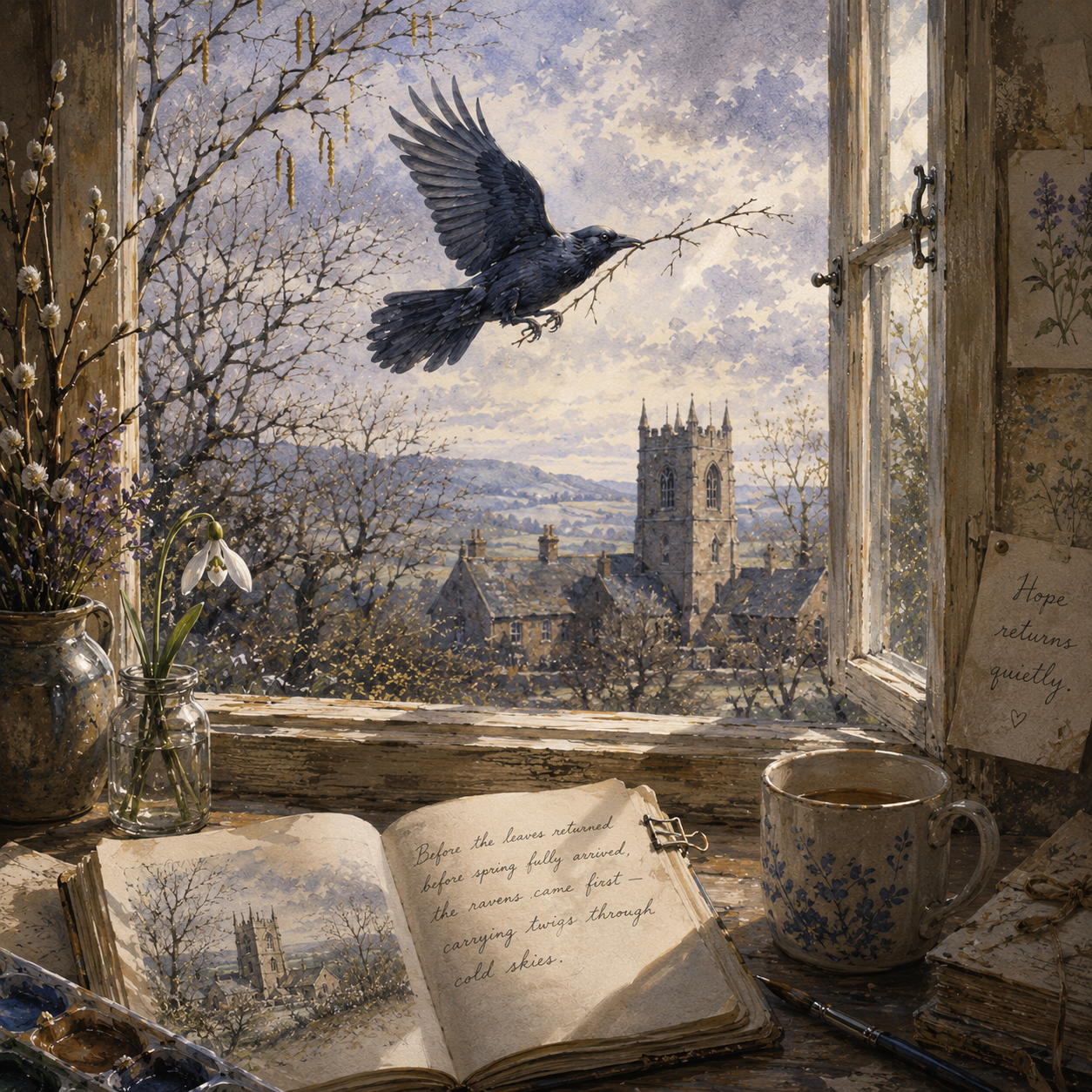
The birds were industrious, eager, and completely absorbed in their task. The male would fly away and return with another stick clasped carefully in his beak, ready to add it to the already-growing nest. I loved the quiet familiarity between them. The female would remain waiting, carefully rearranging each twig exactly where she wanted it. She was very particular about her home. Once satisfied, she would glance at the male, and off he would go again in search of another branch. Apparently, the nest was still not quite right.
Sometimes they swept past my office window so closely I could see the sticks protruding from their beaks — treasures gathered from hedges, gardens, and forgotten corners of the village. Little pieces of the world collected for the building of their tree-top cottages.
And all the while, beyond and below them, the human world had gone strange.
It was the spring of 2020.
We had all been shut inside our homes. Those allowed out wore masks and followed signs reminding us to keep our distance from one another. Schools closed. Businesses shifted. Familiar routines dissolved almost overnight. The world felt uncertain in a way many of us had never experienced before.
But the ravens knew nothing of it.
They continued building.
Continued gathering.
Continued preparing for spring.
And I remember being deeply comforted by that.
Life was still unfolding somewhere beyond our fear. The earth was still turning. Seasons were still arriving exactly when God intended them to. Spring had not been cancelled simply because humanity was struggling.
Helen Keller once wrote:
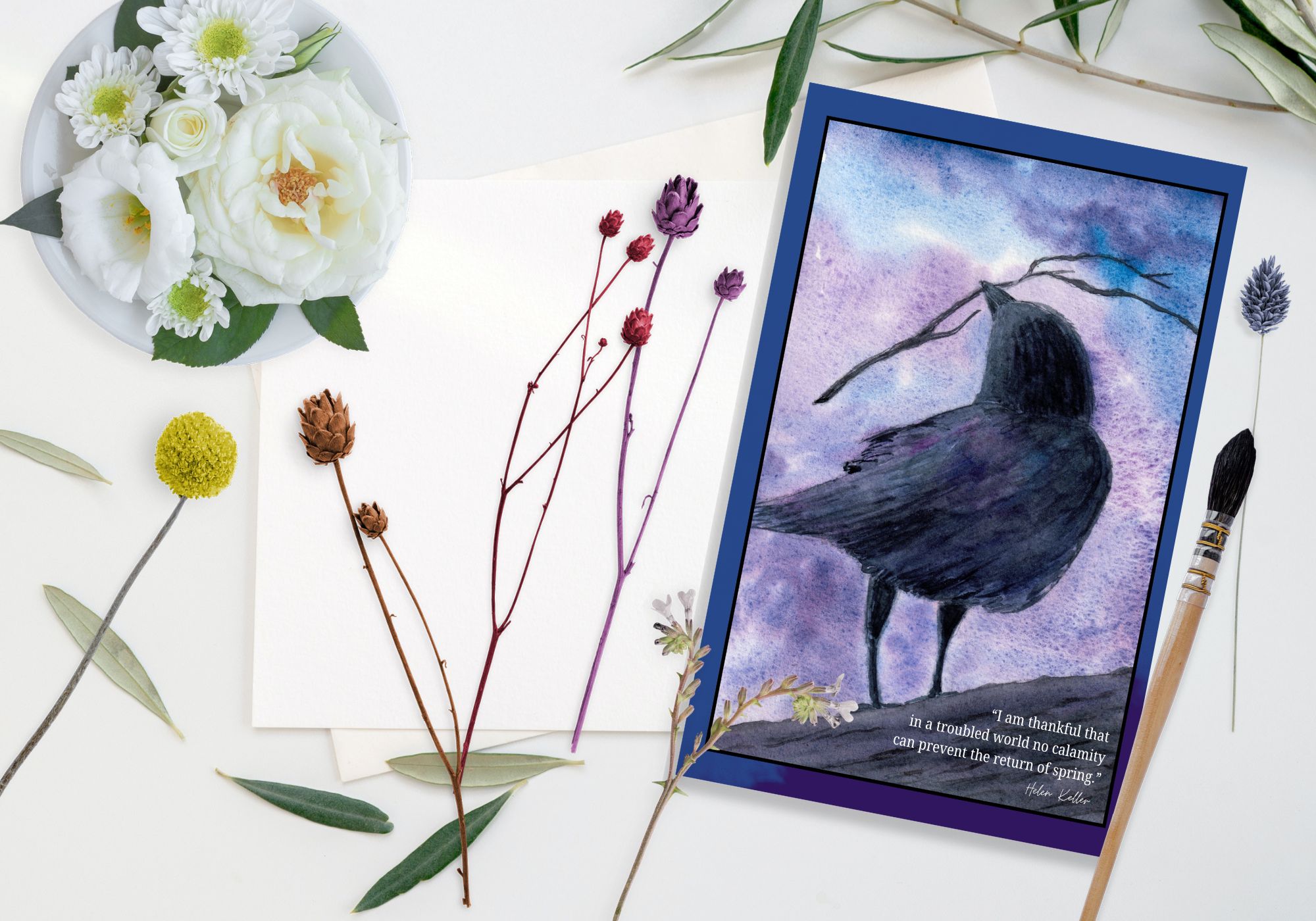
“I am thankful that in a troubled world no calamity can prevent the return of spring.”
I have loved those words ever since I first read them, because they capture exactly what I felt during that strange season.
No matter what happens in the world, the seasons continue. Somewhere, birds are still weaving nests from twigs. Lambs are still being born in wet green fields. The moon still rises. Rain still falls. Seeds still break open beneath the soil. New life still quietly begins again and again.
This February, as winter dragged on here in Scotland, I found myself thinking about those ravens.
Spring arrives late where we live now. The trees remain bare long after the calendar insists winter should be over, and this year snow arrived in March and April more fiercely than it had all winter. There were days when it felt as though spring might never come at all.
And I realised that what I missed most were the ravens.
To me, they had become the first true sign of spring — a reminder that life was moving forward even when the world felt heavy or uncertain.
So, with ravens on my mind and longing in my chest, I opened my art journal and began to paint.
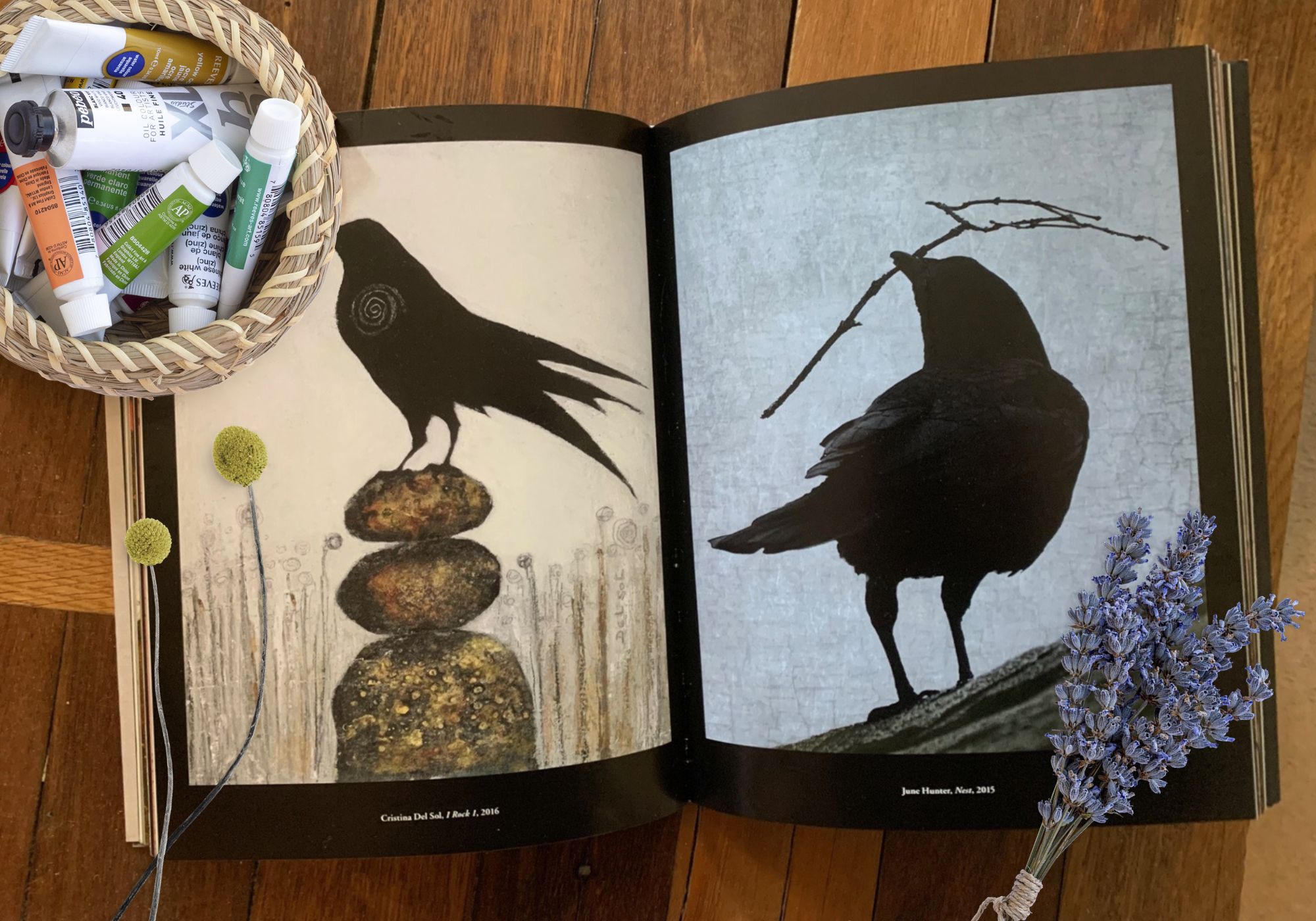
I had recently come across the beautiful photograph Nest by artist Jane Hunter in The Book of the Raven: Corvids in Art and Legend. If you love corvid art, I highly recommend seeking out her work. Her original image stayed with me deeply — but as I painted, my mind returned to my own ravens: the ones flying past my office window with sticks in their beaks during that strange spring of 2020.
So my painting became less about the original photograph and more about memory, longing, and hope.
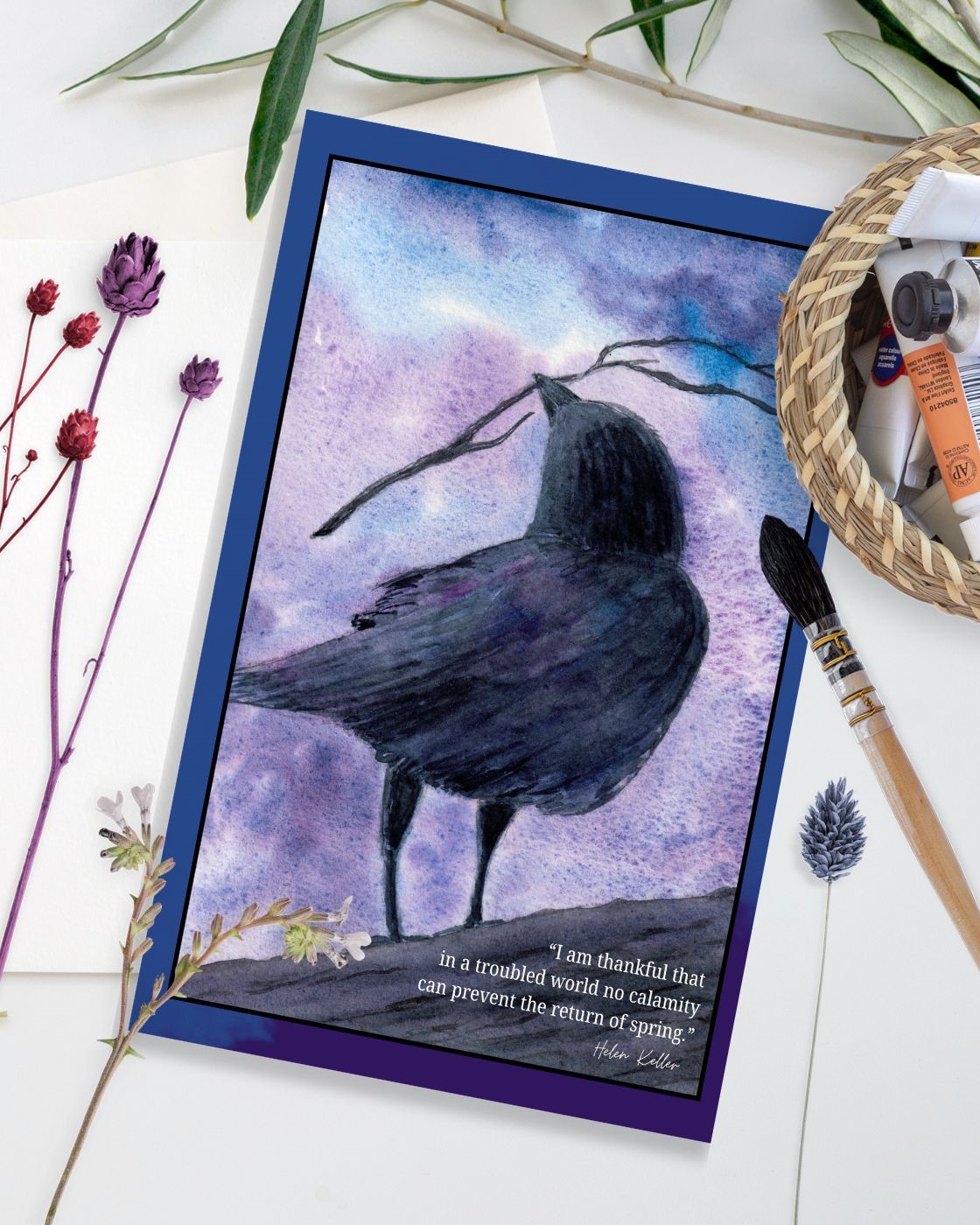
I painted a raven standing beneath a sky that still feels caught between seasons — not fully winter, not fully spring. A bird looking outward toward something not yet arrived, but surely coming all the same. (You can see that watercolour painting in the images below.)
And perhaps that is where many of us find ourselves sometimes.
Waiting for the season to turn.
Waiting for things to soften.
Waiting for light to return to places that have felt cold for too long.
This year, spring has not arrived gently for our family. Life has felt uncertain and emotionally exhausting in ways that at times seemed far larger than us. Difficult seasons can do that — they can loom so large that it feels as though the whole universe has somehow tilted out of place.
But spring keeps arriving anyway.
Not because life is easy.
Not because the world is perfect.
But because God designed the world with renewal written into it.
Sometimes hope does not arrive loudly. Sometimes it appears quietly — in the return of birdsong, in the swelling of buds on bare branches, in the first green pushing stubbornly through frozen ground.
And sometimes all we need to do is notice it.
*****
To mark the final emerging of spring here in the northern hemisphere, we wanted to share a small spring gift with you.
We’re offering a free download of our Spring Collage card — one of the most meaningful pieces we’ve ever created.
You can download it here, along with the story of why this particular card means so much to us.
About the Author: Lisa Saul




 Pinterest
 YouTube